

| Species | Common Name | Key Medicinal Compounds | Primary Traditional Uses | Safety Precautions |
|---|---|---|---|---|
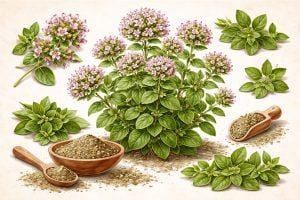
| Origanum heracleoticum | Greek Oregano | Carvacrol, thymol, rosmarinic acid | Strong antimicrobial, digestive tonic, antioxidant, respiratory infection relief, anti-inflammatory. | Generally safe in culinary doses; essential oil should be diluted and used short-term. May interact with blood thinners. |
| Rosmarinus officinalis | Rosemary | Rosmarinic acid, camphor, 1,8-cineole, α-pinene | Memory and concentration enhancement, circulatory stimulant, muscle pain relief, anti-inflammatory, antioxidant, hair and scalp health. | Safe in food amounts; essential oil can be neurotoxic in high doses. Avoid in pregnancy, epilepsy, hypertension. |
| Salvia officinalis | Common Sage | Thujone, camphor, rosmarinic acid, 1,8-cineole | Digestive aid, sore throat gargle, menopausal symptom relief (night sweats), antimicrobial mouthwash, mild antidepressant. | Thujone is toxic in excess — avoid prolonged use, high doses, and during pregnancy. Not recommended for breastfeeding. |
| Salvia fruticosa | Greek Sage | 1,8-cineole, camphor (lower thujone), rosmarinic acid | Respiratory conditions (bronchitis, sinusitis), antidiabetic support, anti-inflammatory, mild nervine, digestive tea. | Safer than S. officinalis due to lower thujone, but still avoid in pregnancy. Monitor blood sugar if diabetic. |
| Lavandula angustifolia | Lavender | Linalool, linalyl acetate, camphor | Anxiety and stress relief, sleep aid (insomnia), antiseptic for minor burns and cuts, headache relief, insect repellent. | Generally safe; topical use may cause dermatitis in sensitive individuals. Oral essential oil use only under guidance. |
| Helichrysum italicum | Immortelle | Neryl acetate, italidiones, pinene | Skin regeneration (scars, burns, wounds), anti-inflammatory, anti-hematoma, antiallergic, expectorant for coughs. | Very safe topically; no significant toxicity reported. Rare allergic skin reaction possible. Pregnancy safety not fully established. |
| Cupressus sempervirens | Mediterranean Cypress | Monoterpenes (α-pinene, carene), tannins, flavonoids | Antiseptic for respiratory tract (inhalation for coughs/colds), venous circulation support (varicose veins, hemorrhoids), astringent for skin, antispasmodic. | Essential oil may irritate skin and mucous membranes if undiluted. Avoid in pregnancy, kidney issues, and hypertension. |
| Foeniculum vulgare | Fennel | Anethole, fenchone, estragole | Digestive aid (bloating, cramps), galactagogue (increases milk flow), expectorant for coughs, mild diuretic, eye wash for irritation. | Estragole is potentially carcinogenic in high/long-term use. Avoid high doses in pregnancy and infants. May interact with estrogen-sensitive conditions. |
| Laurus nobilis | Bay Laurel | Cineole (eucalyptol), linalool, methyl eugenol | Digestive stimulant, anti-inflammatory (arthritis), respiratory relief (steam inhalation), antifungal, wound poultice. | Leaves safe in cooking; essential oil must be diluted. Avoid in pregnancy and with children. Can cause dermatitis. |
| Pinus sylvestris | Scots Pine | α-pinene, limonene, bornyl acetate | Expectorant for bronchitis and sinusitis, antiseptic (urinary/respiratory), topical analgesic for muscle/joint pain, sauna/steam use. | May irritate kidneys in high doses; avoid oral essential oil. Topical use should be diluted; not for pregnant/nursing women or asthmatics. |
| Citrus × sinensis | Sweet Orange | Limonene, linalool, myrcene, flavonoids | Digestive tonic, mild sedative (anxiety relief), vitamin C source (immune support), antiseptic in cleaning, skin tonic in cosmetics. | Essential oil is phototoxic — avoid sun exposure after topical use. May cause irritation in sensitive skin. Safe in dietary amounts. |

Categories: Uncategorized


Leave a Reply
You must be logged in to post a comment.