

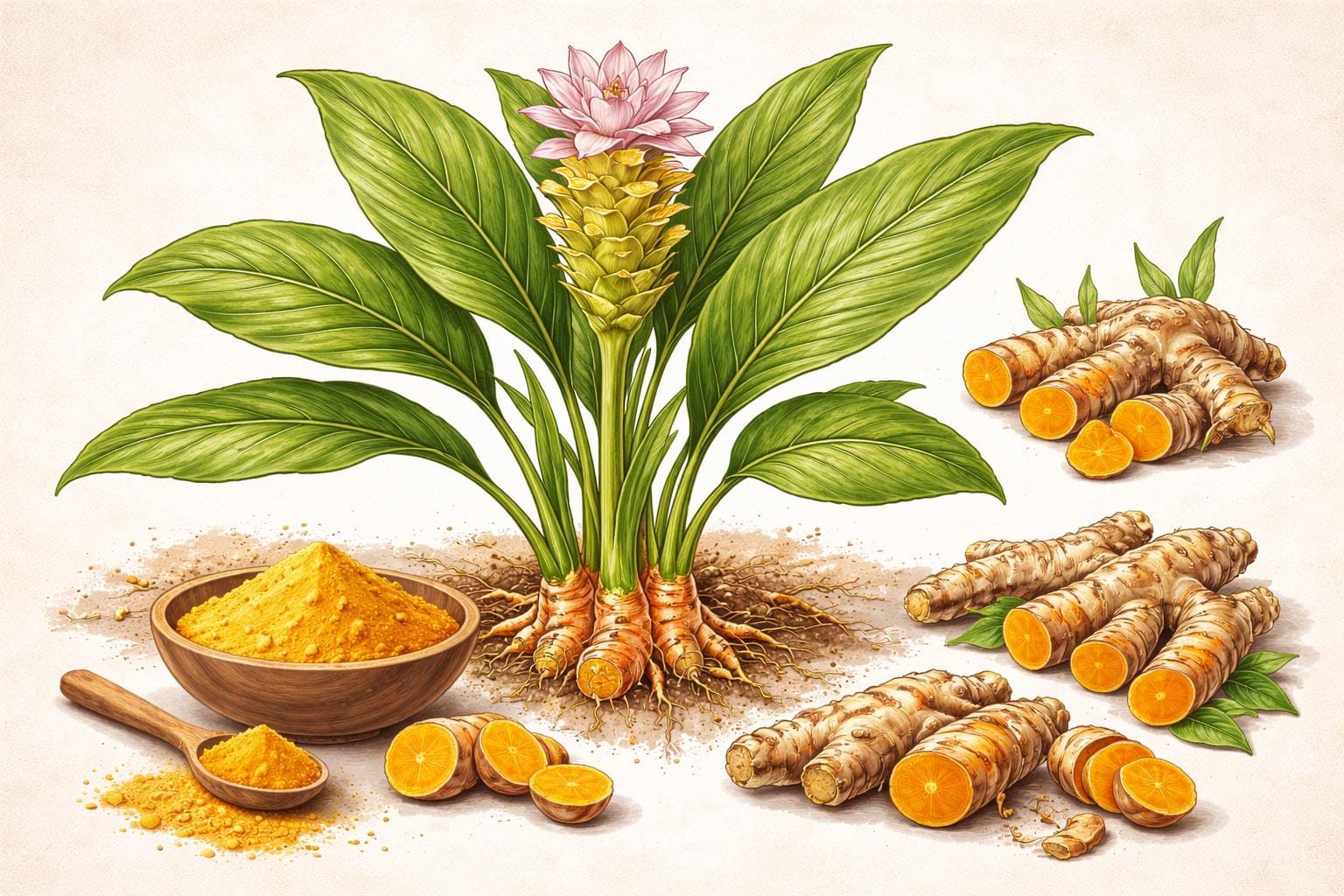
The Golden Spice of Life
Turmeric, known scientifically as Curcuma longa, is a plant that has colored and flavored the world for millennia. Often called “Indian Saffron” or the “Golden Spice,” it is an integral part of Asian cuisine, traditional medicine, and even religious ceremonies.In recent decades, it has become a superstar in the world of modern natural health, with thousands of studies validating its ancient uses.
Plant Description and Origin
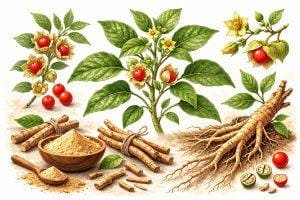
Turmeric is a perennial herbaceous plant belonging to the ginger family (Zingiberaceae). It grows to about 1 meter in height and features large, beautiful, oblong leaves. While it produces pale yellow flowers arranged in a spike-like structure, the plant is sterile and does not produce viable seeds. It is propagated almost exclusively through its rhizomes.
The plant’s treasure is its rhizome—an underground stem that is thick, orange to bright yellow-orange on the inside, and highly aromatic. The exact origin of Curcuma longa is unknown as it is a cultigen, not found in the wild, but it is thought to have originated from selection and hybridization in South or Southeast Asia, most likely India. Today, India remains the world’s largest producer, consumer, and exporter of turmeric.
Active Chemical Constituents
The vibrant yellow color and most of the health benefits of turmeric are attributed to a group of compounds called curcuminoids. The most abundant and well-researched of these is curcumin. The rhizome also contains essential oils (volatile oils) rich in other beneficial compounds like turmerone and zingiberene, which contribute to its aroma and therapeutic effects.
It is important to note that curcumin on its own is poorly absorbed by the body. However, when consumed with black pepper, which contains piperine, its bioavailability is dramatically enhanced.
Traditional and Modern Medicinal Uses
Turmeric has a history of use spanning nearly 4,000 years. In Ayurveda and Traditional Chinese Medicine (TCM), it was used as a digestive aid, a blood purifier, and a remedy for skin diseases, liver ailments, and wound healing. Modern science has confirmed that its traditional uses align with its potent biological activities.
- Powerful Anti-inflammatory: Chronic inflammation is now understood to be a root cause of many modern diseases. Curcumin is a potent anti-inflammatory agent that works by inhibiting multiple pathways involved in the inflammatory process, such as the NF-κB and COX-2 enzymes. This makes it effective in managing inflammatory conditions.
- Arthritis Relief: Clinical trials have shown that turmeric extracts can significantly reduce pain and inflammation in patients with osteoarthritis and rheumatoid arthritis, with effects comparable to some non-steroidal anti-inflammatory drugs (NSAIDs) but with a better safety profile.
- Digestive Health: Traditionally used to calm the stomach, turmeric stimulates the production of bile by the gallbladder, which helps in the digestion of fats. It has been used to relieve indigestion (dyspepsia), gastric ulcers, and symptoms of irritable bowel syndrome (IBS).
- Powerful Antioxidant: Curcumin is a potent antioxidant that can neutralize free radicals (unstable molecules that damage cells) and also stimulate the body’s own antioxidant enzymes, providing a double-layer of protection against oxidative stress.
- Joint, Muscle, and Skin Health: The anti-inflammatory and antioxidant properties make turmeric useful for treating tendonitis and muscle soreness. Topically, it has been used in pastes for wounds, bites, and various skin conditions like eczema and acne to prevent infection and speed healing.
- Cardiovascular and Metabolic Support: Studies suggest that curcumin may improve the function of the endothelium (the lining of blood vessels), which is crucial for regulating blood pressure and preventing clotting. It is also being researched for its ability to improve lipid profiles and manage blood sugar levels.
- Neuroprotective and Anti-cancer Potential: Emerging research, including preclinical studies, indicates that curcumin can cross the blood-brain barrier and may help reduce the neuroinflammation associated with Alzheimer’s disease. Additionally, its ability to modulate cell proliferation and apoptosis (programmed cell death) has sparked intense interest in its potential role in cancer prevention and treatment, though human trials are still in early stages.
Forms and Typical Dosage
Turmeric can be used in various forms, from a simple culinary spice to concentrated supplements:
- Powdered Spice: The most common form, used in cooking. A typical culinary dose is 1 to 3 grams of the powder daily.
- Standardized Extract (Capsules): For therapeutic benefits, standardized extracts containing high levels of curcuminoids are often preferred. The typical dose ranges from 500 to 2,000 mg of these extracts per day, usually divided into two doses. To maximize absorption, it is recommended to take it with a meal containing fat and black pepper.
- Tincture and Tea: The fresh or dried rhizome can also be used to make tea or a liquid tincture.
Safety, Side Effects, and Precautions
Turmeric is generally regarded as safe (GRAS) when used in amounts commonly found in food. However, high doses in supplement form require some caution -6.
- Common Side Effects: At high doses, it can cause gastrointestinal discomfort, including nausea, diarrhea, or indigestion.
- Gallbladder Issues: Because it stimulates bile production, individuals with gallstones or bile duct obstruction should consult a doctor before taking high-dose turmeric supplements -6.
- Blood Thinning: Turmeric has mild blood-thinning (anticoagulant) properties. It should be used with caution, and ideally under medical supervision, by people taking prescription blood thinners like warfarin.
- Pregnancy: While culinary use is safe, concentrated extracts should be avoided during pregnancy due to potential effects on uterine stimulation.
- Drug Interactions: Turmeric can interact with antacids (by increasing stomach acid), diabetes medications (by potentially lowering blood sugar too much), and the aforementioned blood thinners.
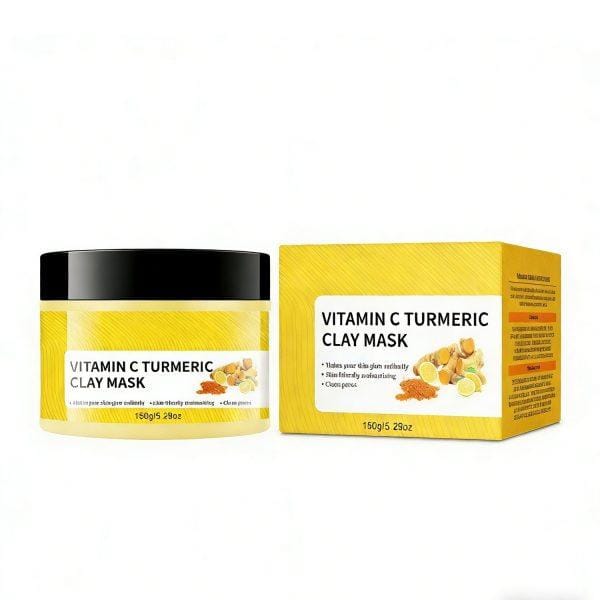
Turmeric Kaolin clay Facial mask (150g)
Worldwide shipping included!
Rejuvenating Turmeric & Vitamin C Clay Mask
Awaken dull, blemish-prone skin with this potent, balancing mask. Formulated with brightening Vitamin C, antioxidant-rich organic turmeric, and purifying Kaolin clay, it deeply cleanses pores and refines skin texture.
✨ Brightens & Revitalizes: Fades dullness and promotes a radiant, even-toned glow.
🧼 Deep Cleanses: Draws out impurities, excess oil, and toxins without over-drying.
⚖️ Balances & Refines: Helps minimize the appearance of pores and controls shine.
💧 Gently Hydrates: Leaves skin feeling refreshed, smooth, and soft—not stripped.
Suitable for all skin types. For a clearer, brighter complexion.
Net weight: 150 g (5.29 oz)


Leave a Reply
You must be logged in to post a comment.