

Health Applications and Safe Usage Guide
Introduction
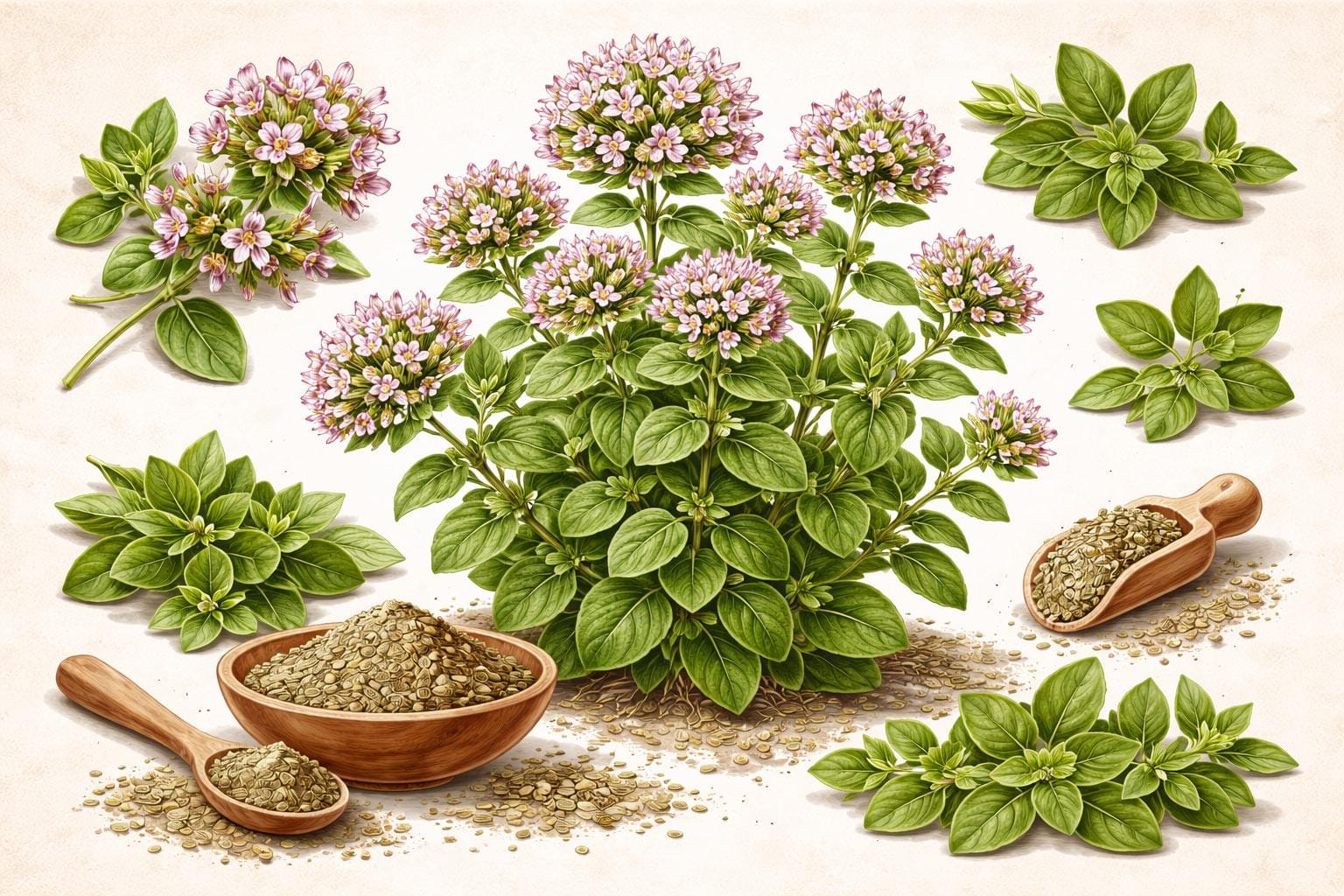
Greek wild oregano (Origanum heracleoticum L.), also known as “Greek oregano” or “white oregano,” is a perennial herb native to the Mediterranean region, particularly Greece and parts of the Balkans (1). This aromatic plant belongs to the Lamiaceae (mint) family and has been valued for centuries in traditional medicine. Ancient scholars like Pliny the Elder documented its medicinal use, noting its application for coughs, indigestion, and even spider stings (9). Today, modern scientific research is validating many of these traditional applications, revealing a complex biochemical profile with significant therapeutic potential.
What makes Origanum heracleoticum particularly special is its distinction from common oregano (Origanum vulgare). While both share some characteristics, Greek wild oregano typically contains higher concentrations of bioactive compounds, particularly the phenols carvacrol and thymol, which are responsible for many of its health-promoting properties (1,2).
Botanical Characteristics and Chemical Composition
Origanum heracleoticum is a highly aromatic perennial with deep green, fuzzy leaves and clusters of small white flowers that bloom in summer -10. The plant thrives in warm, dry Mediterranean climates with well-drained, sandy or rocky soil, and its flavor intensity actually increases under drier growing conditions (10).
The therapeutic value of Greek oregano lies primarily in its essential oil, which contains a remarkable array of volatile compounds. Chemical analyses consistently identify carvacrol as the dominant component, typically comprising 70-77% of the essential oil (2,6). Other significant constituents include:
- p-cymene (approximately 11-13%) (2,6)
- Thymol (varies by chemotype) (1)
- γ-terpinene (1)
- Various other monoterpenes and sesquiterpenes -5
Research has identified that O. heracleoticum plants from different regions, particularly Bulgaria, predominantly belong to the carvacrol chemotype, meaning this phenol is consistently the major active compound regardless of growing conditions, though environmental factors can influence overall composition (5).
Health Applications and Scientific Evidence
Antimicrobial Activity
One of the most extensively documented properties of Greek oregano essential oil is its potent antimicrobial activity. Research demonstrates effectiveness against a wide range of pathogenic microorganisms.
Antibacterial effects: The oil shows significant activity against both gram-positive and gram-negative bacteria, including Staphylococcus aureus, Pseudomonas aeruginosa, and various foodborne pathogens(2,4). The phenolic compounds, particularly carvacrol and thymol, appear to work by disrupting bacterial cell membranes, altering membrane potential and permeability (4).
Antifungal properties: Recent 2025 research on Bulgarian O. heracleoticum essential oil demonstrated remarkable antimycotic activity against 138 clinical isolates of Candida species, including both fluconazole-sensitive and resistant strains (6). The minimum inhibitory concentrations ranged from 64-128 μg/mL. Importantly, the oil not only inhibited fungal growth but also disrupted key virulence factors by:
- Preventing germination and transition to the filamentous stage
- Inhibiting production of hydrolytic enzymes
- Disrupting normal cell membrane permeability (6)
Anticancer Potential
Emerging research suggests promising anticancer properties. A 2025 study investigating Bulgarian oregano essential oil found that it significantly reduced viability of several human cancer cell lines, including:
- Lung adenocarcinoma epithelial cells (A549)
- Hepatocellular carcinoma cells (HepG2)
- Breast adenocarcinoma cells (MDA-MB-231)
Notably, the oil exhibited considerably lower toxicity toward healthy mouse fibroblast cells, suggesting selective cytotoxicity that warrants further investigation(-2.
Effects on the Central Nervous System and Metabolism
Recent research has identified intriguing effects on enzymes relevant to both neurological and metabolic health. Origanum heracleoticum essential oil demonstrated the most potent activity among several Origanum species against:
- Acetylcholinesterase (IC50: 0.51 μg/mL) – an enzyme targeted in Alzheimer’s disease management
- Lipase (IC50: 14.94 μg/mL) – involved in fat metabolism -1
These findings suggest potential applications in managing neurodegenerative conditions and metabolic disorders, though clinical studies are needed to confirm these effects in humans (1).
Antioxidant Properties
Greek oregano exhibits significant antioxidant activity, attributed to its high content of phenolic compounds including carvacrol, thymol, and rosmarinic acid -4-5. Research on Bulgarian populations of O. heracleoticum has confirmed substantial antioxidant potential through both enzyme-based mechanisms (superoxide dismutase, catalase, peroxidase) and non-enzyme mechanisms involving phenols and flavonoids -5. While laboratory studies are compelling, a clinical trial in healthy men found no significant changes in lipid peroxidation biomarkers with oregano extract supplementation, indicating that more research is needed to understand clinical relevance -4.
Traditional Uses
Traditional herbal medicine has employed Origanum heracleoticum for various complaints, including:
- Cough and respiratory ailments (1)
- Toothache (1)
- Digestive disturbances and indigestion (4,10)
- Muscle and joint pain (topically)
References
- Amato G, Caputo L, De Martino L. Chemical composition and anti-enzymatic activity of the volatile fraction of four species belonging to the Origanum genus. UniSa IRIS. 2024 -1
- Bioactive potential of Origanum heracleoticum L. essential oil: Chemical composition and its antimicrobial and anticancer properties. Journal of Essential Oil Bearing Plants. 2025;28(2):414-426 -2
- Oregano4life Wild Oregano Oil 100%. G. Baldwin & Co. -3
- Oregano Uses, Benefits & Dosage. Drugs.com. Updated July 2025 -4
- Composition of essential oils and antioxidant properties of Origanum heracleoticum L. from Bulgarian populations. Current Applied Science and Technology -5
- Antimycotic Activity of Essential Oil of Origanum heracleoticum L. from Bulgaria Against Clinical Isolates of Candida spp. Applied Sciences. 2025;15(21):11672 -6
- 100% Pure Oregano Essential Oil. Joom.com -7
- Oil of Oregano. Alberta Rheumatology -8
- Pliny the Elder. Natural History, Book XX. Loeb Classical Library -9
- Oregano, Greek. Planted Wellness Co. (10)


Leave a Reply
You must be logged in to post a comment.