

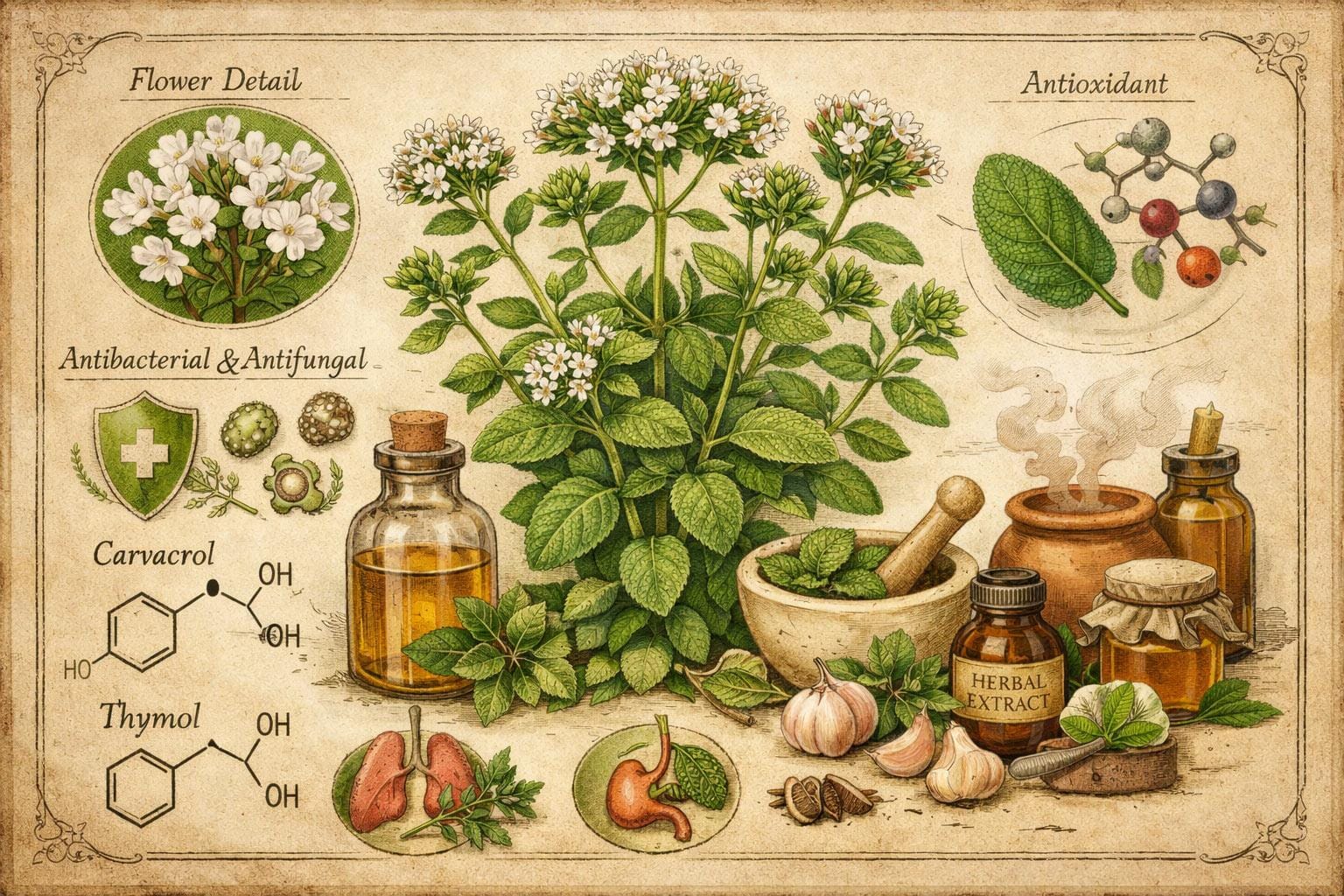
Forms of Greek Oregano
Greek oregano can be used in several forms:
- Dried herb – For culinary use and tea preparation
- Essential oil – Highly concentrated, requires dilution
- Hydroethanolic extracts – Alcohol-based tinctures
- Infused oils – Carrier oil infused with oregano (milder than essential oil)
Internal Use Guidelines
Culinary use: As a food herb, Greek oregano is Generally Recognized as Safe (GRAS) by the FDA -4. Dried or fresh leaves can be used liberally in cooking.
Essential oil internal use: Considerable caution is required. Commercial products recommend:
- 2-4 drops daily in a glass of water, juice, or diluted in vegetable oil -3
- Dilution ratio of 1:10 to 2:10 (one drop oregano oil to 9-4 drops olive oil or other carrier oil) -7
- Starting with 1-2 drops and gradually increasing to assess tolerance -7
Note: These are commercial recommendations, not clinically established therapeutic doses. A small clinical study used 200 mg/day of emulsified oregano oil for 6 weeks -4.
External Use Guidelines
For topical application:
- Acne, insect bites, toothache: Dilute 2-5 drops in half a teaspoon of olive oil and apply topically -3
- Massage (chest, joints): Add 5 drops to a tablespoon of vegetable carrier oil (almond, jojoba, etc.) -3
- General dilution: 20-30% oregano oil in carrier oil, depending on skin sensitivity -7
Herbal Tea Preparation
Steep 1-2 teaspoons of dried Greek oregano leaves in hot water for 10-15 minutes. This traditional preparation supports digestion and respiratory health -10.
Important Warnings and Contraindications
Critical Safety Rules
NEVER USE UNDILUTED ESSENTIAL OIL TOPICALLY OR INTERNALLY -3. Pure oregano essential oil is highly concentrated and can cause severe irritation, burns, and mucosal damage.
Who Should Avoid Greek Oregano Products
Pregnancy and breastfeeding: Safety is unproven beyond culinary amounts. Avoid medicinal quantities as some studies suggest hormonal effects -4-7.
Allergies: Do not use if allergic to plants in the Lamiaceae family, including basil, lavender, mint, sage, and thyme -7-8.
Children: Keep out of reach; safety in children has not been established -7.
Drug Interactions
Greek oregano may interact with several medications:
| Medication Class | Potential Interaction |
|---|---|
| Anticoagulants/Antiplatelets (warfarin, aspirin, clopidogrel) | May increase bleeding risk -8 |
| Diabetes medications | May lower blood sugar; monitor levels closely -8 |
| Lithium | May affect lithium elimination -8 |
| Iron, zinc, copper supplements | May reduce mineral absorption -8 |
Surgical Considerations
Due to potential effects on blood clotting, discontinue oregano oil products at least 2 weeks prior to any surgical procedure -8.
Side Effects
- Oral use: Large amounts may cause stomach upset -8
- Topical use: Allergic contact dermatitis has been reported -4
- Systemic reactions: Rare cases of eczematous rash and anaphylaxis have occurred with ingestion -4
Other Precautions
- Avoid contact with eyes and mucous membranes -7
- The warming or heating sensation when using oregano oil is normal but should not be painful -7
- Look for products with high carvacrol content (minimum 70-85%) and low thymol (<3%) for optimal therapeutic benefit -3-7
Conclusion
Greek wild oregano (Origanum heracleoticum) represents a remarkable intersection of traditional wisdom and modern scientific validation. Its potent antimicrobial, antioxidant, and enzyme-modulating activities offer promising therapeutic potential, particularly for infectious conditions and possibly metabolic and neurological disorders. However, the concentrated essential oil must be treated with respect—proper dilution and awareness of contraindications are essential for safe use.
As with any medicinal product, consultation with a healthcare provider is recommended before using oregano preparations therapeutically, especially for individuals with underlying health conditions or those taking medications.
References
- Amato G, Caputo L, De Martino L. Chemical composition and anti-enzymatic activity of the volatile fraction of four species belonging to the Origanum genus. UniSa IRIS. 2024 -1
- Bioactive potential of Origanum heracleoticum L. essential oil: Chemical composition and its antimicrobial and anticancer properties. Journal of Essential Oil Bearing Plants. 2025;28(2):414-426 -2
- Oregano4life Wild Oregano Oil 100%. G. Baldwin & Co. -3
- Oregano Uses, Benefits & Dosage. Drugs.com. Updated July 2025 -4
- Composition of essential oils and antioxidant properties of Origanum heracleoticum L. from Bulgarian populations. Current Applied Science and Technology -5
- Antimycotic Activity of Essential Oil of Origanum heracleoticum L. from Bulgaria Against Clinical Isolates of Candida spp. Applied Sciences. 2025;15(21):11672 -6
- 100% Pure Oregano Essential Oil. Joom.com -7
- Oil of Oregano. Alberta Rheumatology -8
- Pliny the Elder. Natural History, Book XX. Loeb Classical Library -9
- Oregano, Greek. Planted Wellness Co.


Leave a Reply
You must be logged in to post a comment.