

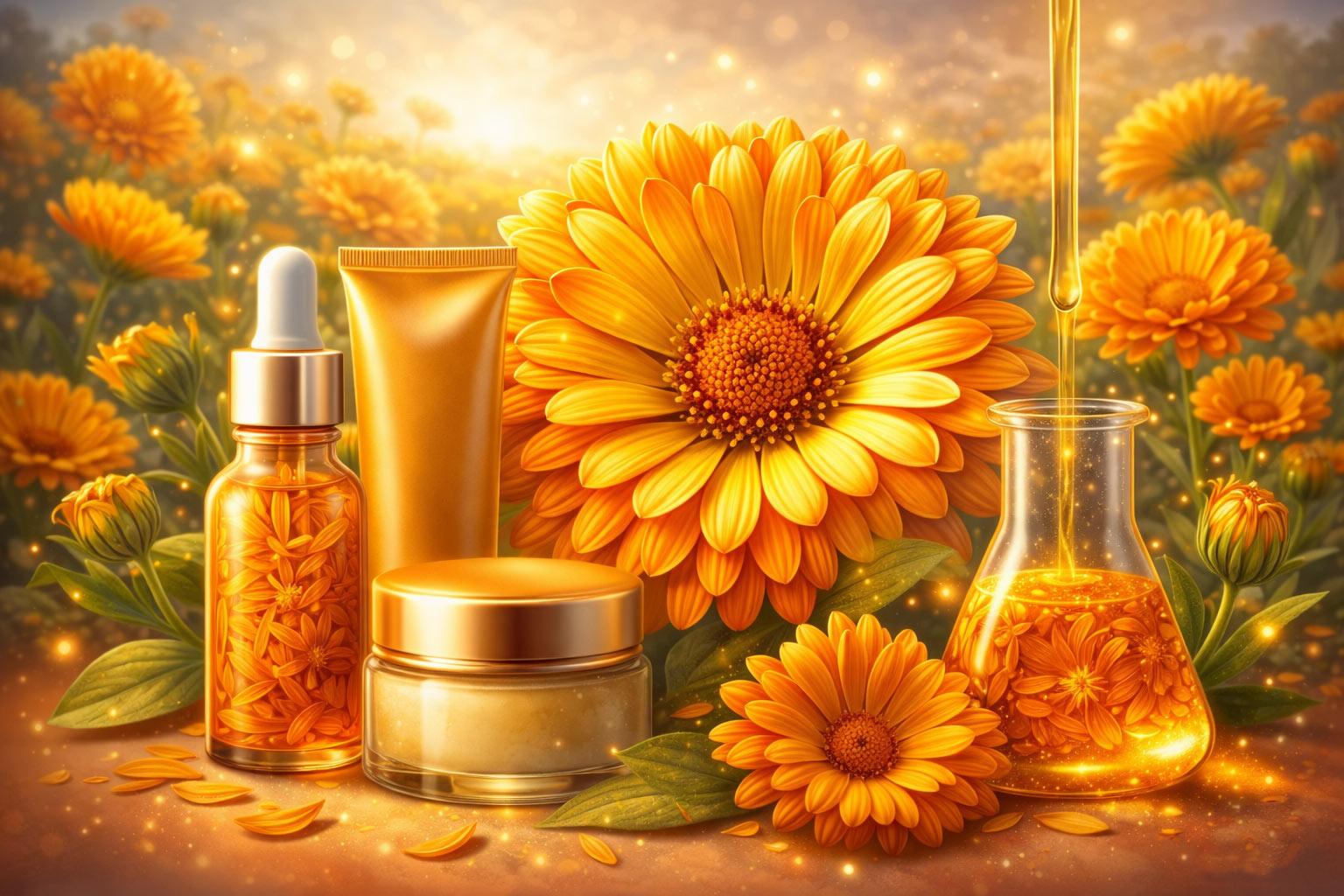
In the world of natural cosmetics, few plants have a reputation as rich and well-deserved as calendula. Known scientifically as Calendula officinalis and often called “Pot Marigold,” this vibrant plant is far more than just a pretty flower. Originally from the Mediterranean, its name is derived from the Latin calendae, meaning “the first day of the month,” as it was believed to bloom at the start of each month in its native lands. Today, it is cultivated and cherished worldwide for its powerful healing and cosmetic properties.
A Portrait of the Plant
Calendula is a hardy, annual or short-lived perennial herb that typically grows to a height of 30 to 60 centimeters. It belongs to the Asteraceae family, making it a cousin of daisies and chrysanthemums. The plant is easily recognized by its cheerful flowers, which range in color from soft yellow and cream to deep, vibrant orange. The flower heads are daisy-like and can be single or double-petaled, often closing at night or in wet weather. Its leaves are aromatic, lance-shaped, and slightly sticky to the touch. Easy to cultivate, it prefers full sun and well-drained soil, and its cheerful blooms attract bees and butterflies, making it a favorite in gardens as well.
Why Calendula is a Star in Cosmetics
The magic of calendula lies in its rich biochemical composition. Its petals are packed with active compounds like flavonoids, saponins, triterpenoids, and carotenoids. These substances work together to give the plant its remarkable anti-inflammatory, antimicrobial, and antioxidant properties. For these reasons, calendula is a go-to ingredient for formulators creating products for sensitive, irritated, or damaged skin. Its action is powerful yet gentle, making it suitable even for the most delicate skin, including that of babies.
Specific Uses in Cosmetics
Calendula’s versatility allows it to be incorporated into a wide array of cosmetic products.
- For Soothing and Sensitive Skin: This is calendula’s most famous role. Thanks to its anti-inflammatory compounds, it is highly effective at calming redness, irritation, and itching. It is a common ingredient in creams and cleansers formulated for conditions like rosacea, eczema, and allergic contact dermatitis. It helps to reduce the visible signs of stress on the skin without disrupting the skin barrier.
- Wound Healing and Regeneration: Calendula is a powerful healing agent. It promotes the growth of new tissue and increases blood flow to the skin, which helps wounds, cuts, scrapes, and bruises heal faster and with reduced scarring. This property makes it a popular addition to first-aid balms and ointments for minor burns and sunburns.
- Hydration and Anti-Aging: The antioxidants in calendula, such as flavonoids, help protect the skin from free radicals and oxidative stress, which are primary causes of premature aging. By fighting this damage, it helps to maintain the skin’s elasticity and hydration, potentially reducing the appearance of fine lines and wrinkles. As an emollient, it also helps to soften and smooth the skin.
- Scientific Formulation Insights: The interest in calendula is not just traditional; it is also scientific. Research has shown that topical formulations (creams and gels) containing calendula extract demonstrate good stability and significant antioxidant capacity. This confirms its ability to neutralize free radicals at a cosmetic level. While its direct sun protection factor (SPF) is low (around 1.75), researchers suggest it could be studied as a potential booster for synthetic sunscreens due to its photo-protective compounds.
Forms of Cosmetic Use
Calendula can be found in cosmetics in several forms:
- Infused Oils: The most common method, where dried calendula flowers are steeped in a carrier oil (like olive or jojoba) to extract their beneficial properties. This oil is then used as a base for balms, salves, and lotions.
- Creams and Ointments: These are used for daily moisturizing, treating dry skin patches, and as a protective layer for irritated skin.
- Extracts and Tinctures: Concentrated liquid forms are often added to water-based products like toners, gels, or cleansing formulas.
- Lip Balms: Its soothing and healing properties make it excellent for chapped lips.
Precautions
While calendula is safe for most people, those with known allergies to plants in the Asteraceae family (such as ragweed, chrysanthemums, or daisies) should exercise caution. It is always recommended to perform a patch test before using a new product extensively. Pregnant or breastfeeding women are typically advised to avoid using calendula in medicinal concentrations



Leave a Reply
You must be logged in to post a comment.